Nowadays, divorce cases are increasingly common, leading to a growing demand for lawyers to assist with legal procedures. Understanding this need and with the goal of providing readers with helpful legal information, NPLaw offers this article outlining important points to consider when handling divorce proceedings, as well as information on divorce services in Nha Trang.
1. Introduction to NPLaw’s divorce services in Nha Trang
NPLaw is a professional law firm providing a wide range of legal services and supporting clients to ensure the best protection of their rights and interests. In the field of family and marriage law, NPLaw offers professional services from legal consultation to assistance with procedural matters.
Currently, NPLaw has offices in some of Vietnam's most developed cities, including Nha Trang. With a team of professionally trained lawyers and legal consultants, NPLaw is fully capable of offering fast and high-quality legal consultation and divorce processing services to clients.
2. Legal regulations on divorce in Vietnam
According to Clause 14, Article 3 of the Law on Marriage and Family 2014:
- Divorce is the termination of the marital relationship under a legally effective judgment or decision of the Court.
The court is the only authority responsible for issuing a legally binding decision to terminate a marriage. This ruling may take two forms:
- Decision: Issued in consensual divorces where both parties agree on all issues concerning their marital relationship.
- Judgment: Issued in contested divorces where the parties are in conflict.

3. How does the Court handle divorce matters?
3.1. Marital relationship
Legally, the marital relationship ends when the court issues a judgment or decision. Divorce can be requested by either one party or both parties. The court carefully considers the matter to ensure voluntary consent and respects the parties’ decisions.
3.2. Child custody
Under Article 81 of the Law on Marriage and Family 2014:
- After divorce, both parents remain responsible for caring for, nurturing, educating, and supporting their children, especially minor children or adult children who are disabled, lack civil capacity, or cannot support themselves financially. The non-custodial parent is obligated to provide child support.
- The parties may agree on child custody and post-divorce responsibilities. If no agreement is reached, the court will decide custody based on the child’s best interests. For children aged 7 and above, the child’s wishes must be considered. Children under 36 months of age are typically assigned to the mother unless otherwise agreed.
3.3. Property division
Property division upon divorce is based on mutual agreement. If no agreement is reached, the court will intervene. Personal property remains with the respective owner. Joint property is divided according to the following principles:
- Property is generally divided equally, taking into account the parties’ circumstances, the condition of the assets, and each party’s contribution to their creation, maintenance, and growth. Contributions such as homemaking and child-rearing are recognized as economic contributions.
- The court seeks to protect the rights and interests of the wife and children, particularly those who are minors, disabled, or financially dependent.
- The division also considers the legitimate interests of both parties in terms of business operations and career development.
- Joint property may be divided in kind or by value. If one party receives more than their fair share in kind, they must compensate the other party for the difference.
- Responsibility for joint financial obligations is based on mutual agreement; if no agreement is reached, the court will decide.

4. Types of divorce
4.1. Unilateral divorce
According to Article 56 of the Law on Marriage and Family 2014, if either spouse files for divorce and mediation at court fails, the court may grant the divorce if there is evidence of domestic violence or serious violations of marital duties that make it impossible to continue the marriage or achieve its purpose.
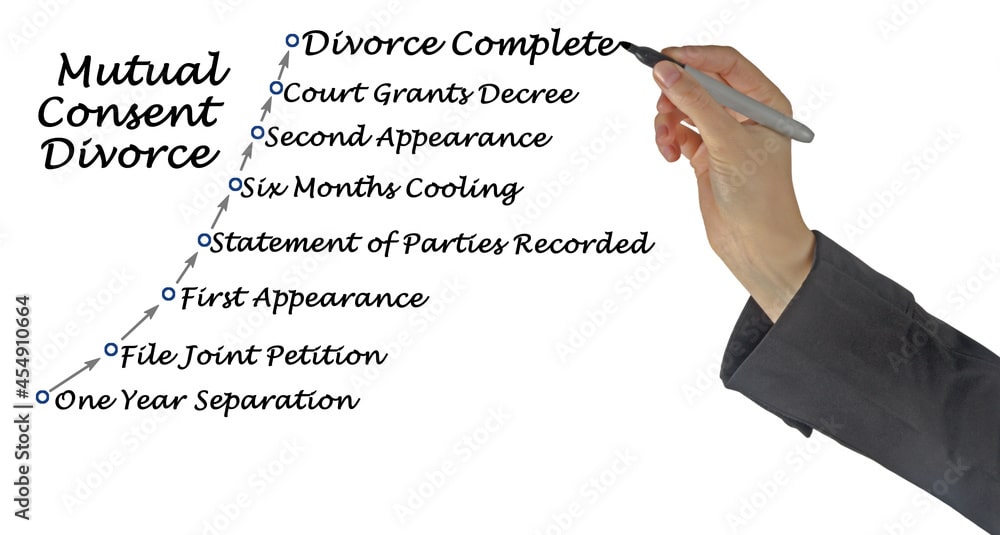
4.2. Consensual divorce
According to Article 55 of the Law on Marriage and Family 2014, if both parties voluntarily agree to divorce and have reached a consensus on property division and child custody in a way that protects the rights of the wife and children, the court will recognize the consensual divorce. If no agreement is reached or the agreement fails to protect the rights of the wife or children, the court will proceed with divorce litigation.
4.3. Divorce involving foreign elements
According to Article 127 of the Law on Marriage and Family 2014, divorces between Vietnamese citizens and foreigners, or between foreigners residing in Vietnam, fall under the jurisdiction of Vietnamese courts as per this law.
Additionally, the law stipulates that disputes over real estate are subject to the laws of the country where the property is located.
5. NPLaw’s divorce services in Nha Trang
With an experienced team of lawyers, NPLaw helps clients navigate marital issues efficiently and effectively. Our services include:
- Providing legal consultation on grounds and conditions for divorce (whether initiated by one party or both);
- Advising on divorce implementation time according to legal procedures;
- Drafting and preparing divorce petitions;
- Filing the petition and monitoring the court's acceptance and processing of the case;
- Protecting the legal rights and interests of the parties involved in disputes over property, custody, etc.