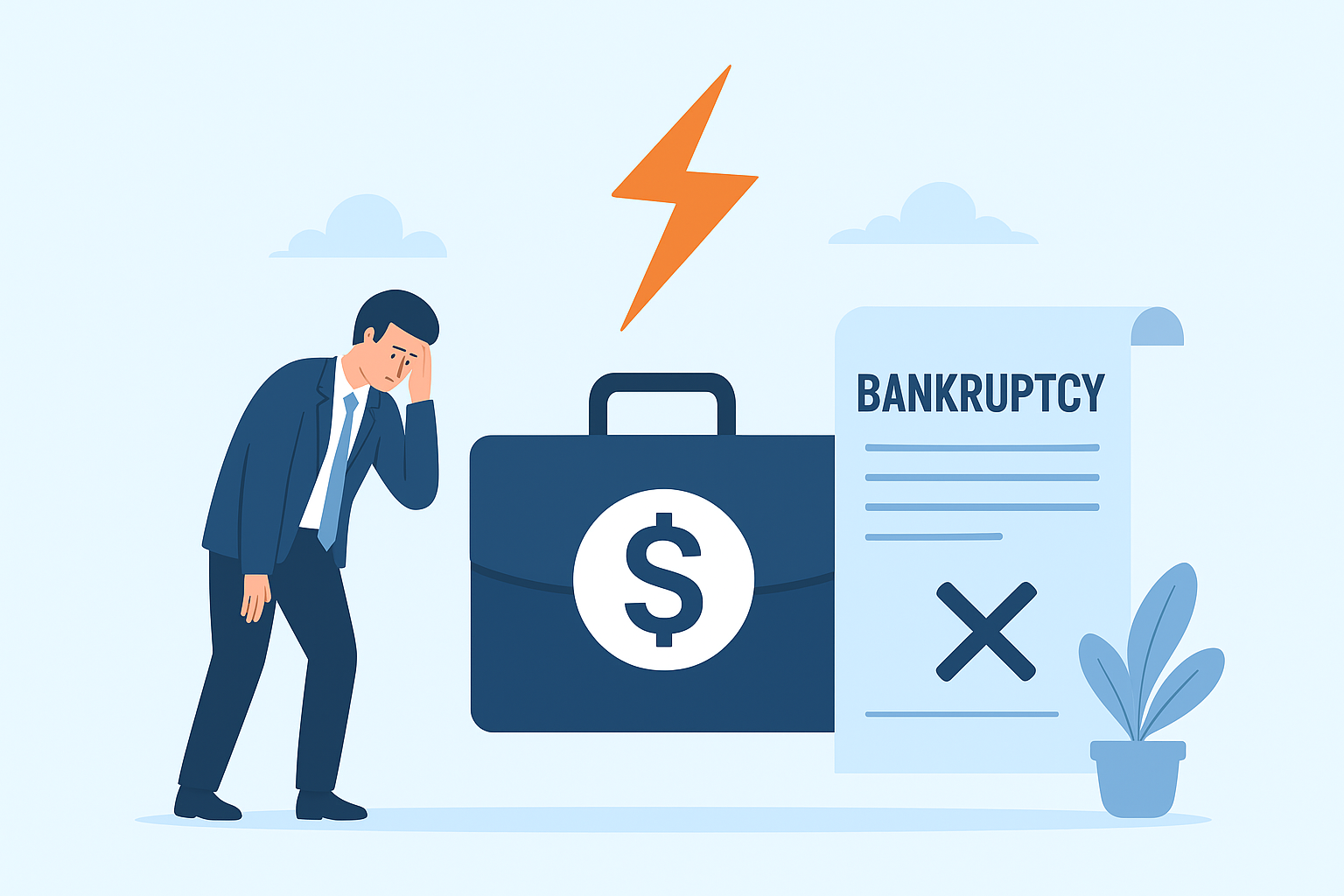
The global economic crisis following the Covid-19 pandemic has significantly impacted the economy worldwide. Many enterprises are facing financial difficulties and the risk of insolvency, leading to bankruptcy. This situation has raised concerns among creditors about how to recover debts when a business partner goes bankrupt.
So, how crucial is debt recovery (debt collection) in cases of partners’ bankruptcy? What are current legal regulations regarding such an issue? What challenges need to be addressed in the debt recovery process when a partner declares bankruptcy?
I. The importance of debt recovery when a partner declares bankruptcy
Bankruptcy is an undesirable outcome in business partnerships. However, in the era of the global economic crisis following the Covid-19 pandemic, many enterprises have faced severe difficulties, leading to bankruptcy. In such cases, prompt debt recovery measures are essential for several reasons:
- If creditors do not quickly initiate debt recovery procedures in accordance with legal regulations when realizing that their partners have become insolvent or are facing bankruptcy, such partners may dispose of assets, leaving no assets to fulfill the debt payment obligations to creditors. This could result in creditors being unable to recover any money, as partners no longer have assets to repay.
Therefore, debt recovery during a partner's bankruptcy is crucial for ensuring that a creditor retrieves their business profits to maintain cash flow and continue their business operations.
II. Legal regulations on debt recovery when a partner declares bankruptcy
The current legal regulations regarding debt recovery when a business partner goes bankrupt are as follows:
1. What is debt recovery in the case of a partner's bankruptcy?
Current laws do not provide a specific definition of debt recovery when a partner goes bankrupt. However, based on related legal provisions, debt recovery in such a case refers to the process by which a creditor follows procedures under the Bankruptcy Law to request the bankrupt enterprise or cooperative to fulfill their debt obligations.
2. Debt recovery process when a partner declares bankruptcy
This article focuses on debt recovery through the filing of a bankruptcy request with the provincial-level People’s Court where the partner’s business is registered. The process includes the following steps:
- Step 1: Submitting a request to initiate bankruptcy proceedings
A party requesting a bankruptcy proceeding must submit an application along with supporting documents and evidence to the competent People's Court through one of two methods: Direct submission to the Court or mailing to the Court. .
- Step 2: Processing the bankruptcy request
+ Within three (03) working days from the date of receipt, the Chief Justice of the People's Court assigns a judge or a panel of judges to handle the request.
+ Within three (03) working days from the date of assignment, the judge must review the request and take one of the following actions:
- Notify the applicant to pay the bankruptcy filing fee and advance bankruptcy expenses (unless exempted);
- Request modifications or additional information if the application is incomplete;
- Transfer the request to the suitable competent People's Court if jurisdiction lies elsewhere.
- Reject and return the application.
+ Additionally, if the creditor submits a bankruptcy request, the debtor and creditor have the right to negotiate for withdrawal of the request within three working days from the date of receipt. The court sets a negotiation period not exceeding 20 days from the date of receiving a valid application.
- Step 3: Acceptance of the bankruptcy request
+ The People's Court will accept the bankruptcy request once the Court receives a receipt for payment of the bankruptcy filing fee; a receipt for the advance payment of bankruptcy expenses. If the applicant is exempt from these payments, the acceptance date will be the day the Court receives a valid bankruptcy request.
- Step 4: Decision to initiate bankruptcy proceedings
+ Within 30 days from the date of accepting the bankruptcy request, the judge must issue a decision either to initiate or not to initiate bankruptcy proceedings, except in cases where the enterprise is declared bankrupt under a simplified procedure.
+ Within three working days from the date of issuing the decision to initiate bankruptcy proceedings, the judge must appoint a bankruptcy trustee or an asset management and liquidation enterprise.
- Step 5: Bankruptcy proceedings
+ After the bankruptcy proceedings are initiated, the enterprises, creditors, and relevant parties must perform key tasks, including: Inventorying the enterprise’s assets; Submitting debt claims; Convening the Creditors’ Meeting; Judicial authorization, etc.
+ At this stage, creditors must:
-
Submit debt claims to the bankruptcy trustee or asset management and liquidation company within 30 days from the date the Court initiates bankruptcy proceedings.
-
Attend the Creditors’ Meeting or authorize a representative in writing to participate on their behalf, as per the Court’s notification.
- Step 6: Declaration of enterprise’s bankruptcy
+ Within 15 days from the date of receiving either a report stating that the Creditors’ Meeting was unsuccessful, or a resolution from the Creditors’ Meeting requesting the declaration of bankruptcy, the People’s Court will review and issue a decision to declare the enterprise bankrupt.
- Step 7: Execution of the bankruptcy decision
+ Within five working days from the date of issuing the bankruptcy decision, the civil judgment enforcement agency must issue an enforcement decision, assign an enforcement officer to execute the bankruptcy decision.
+ Within two working days from receiving the assignment decision, the enforcement officer must send a written request to the bankruptcy trustee or asset management and liquidation company to proceed with the asset liquidation.
+ After receiving the liquidation report, the enforcement officer will implement the asset distribution plan, following the bankruptcy decision for the business or cooperative.
(Based on Articles 26 to 128 of the Bankruptcy Law 2014)
III. Common questions regarding debt recovery when a partner declares bankruptcy
Below are some frequently asked questions and challenges related to debt recovery when a business partner goes bankrupt:
1. What are the practical challenges in debt recovery when a partner declares bankruptcy?
The process of debt recovery in such cases often faces several difficulties, including:
- Creditors need to clearly verify the financial situation of their partners to know whether there are still assets to pay the debt or not, in order to have a reasonable solution. However, in reality, this verification is very difficult.
- The partner has a lack of goodwill, evades the creditor, and delays the repayment period. Some partners even use many tricks to dissipate assets, making the creditor's debt recovery more deadlocked and difficult to handle if not detected and prevented in time.

- Creditors do not have a clear understanding of legal regulations and procedures to ensure that debt recovery is implemented in accordance with current legal regulations, resulting in wasted time and money without guaranteeing debt recovery. Many creditors even use illegal debt recovery methods such as violence, threats, and destruction of the partner's property, etc., to put pressure on them to pay the debt.
Therefore, to ensure that debt recovery is effective when a partner goes bankrupt, in compliance with legal regulations, and to minimize common difficulties, creditors should hire a qualified and professional law firm to carry out the correct procedures to recover the debt in accordance with current legal regulations.
2. Can a debt trading company be used for debt recovery when a partner declares bankruptcy?
Creditors can sell their debt (i.e., transfer their right to claim the debt) from a bankrupt partner to a debt trading company, so that the debt trading company can exercise the right to recover the debt in accordance with the law. However, creditors are not allowed to hire a debt trading company to collect the debt on their behalf through debt collection services. (As per Clause 2, Article 450 of the Civil Code 2015 and Point h, Clause 1, Article 6 of the Investment Law 2020).
3. Is it permissible to intentionally destroy the partner's assets to recover debt when the partner is bankrupt?
Intentionally destroying the partner's assets to recover debt when the partner is bankrupt is an illegal act and cannot be performed. If the creditor performs this act to recover debt when the partner is bankrupt, depending on the nature and severity of the violation, the creditor may be subject to administrative fines (for violating regulations on causing damage to the property of other organizations or individuals under Article 15 of Decree No. 144/2021/ND-CP) or be held criminally liable (for the crime of destroying or intentionally damaging property under Article 178 of the Criminal Code 2015, as amended and supplemented in 2017).
IV. Legal consultation services for debt recovery when a partner declares bankruptcy
NGOC PHU LAW FIRM is experienced in providing legal advice and handling procedures related to debt recovery when a business partner goes bankrupt. Our services include:
- Receiving client inquiries and assisting with legal procedures for debt recovery in bankruptcy cases.
- Advising and guiding clients in preparing necessary documents for the legal process.
- Drafting legal documents, representing Clients, and assisting in work with relevant government authorities.
The information above aims to address concerns regarding debt recovery when a partner goes bankrupt, provided by NPLAW. If you require further clarification or legal assistance, please contact NPLAW via the details below: