Divorce refers to the end of the marital relationship between two spouses, either by mutual consent recognized by the Court through a decision on consensual divorce or upon the request of one spouse, settled and issued by the Court through a divorce judgment.
Although divorce is considered an abnormal social phenomenon, it is nevertheless necessary to ensure the freedom and equality of marriage. In many cases, it serves as a means to reinforce the principles of voluntary and progressive marriage. So, how does Vietnamese law regulate divorce? Below, NPLAW provides answers to common questions on divorce in Vietnam to assist our Clients.

I. Divorce need in Vietnam
The rapid increase in divorce cases in recent years has become a social reality that warrants attention. Statistics indicate that Vietnam records approximately 60,000 divorce cases annually equivalent to 0.75 cases per 1,000 people. The divorce-to-marriage ratio stands at 25%, meaning that every four couples registering their marriage will obtain one couple ending up in court.
Divorces are observed not only in major urban areas with dense populations but also in smaller provinces and districts, where rates can be surprisingly high.
Consequently, the demand for legal advice on divorce is significant, particularly in complex cases involving child custody disputes, division of common assets, or divorces with foreign elements.
II. Divorce in Vietnam
1. What is divorce in Vietnam?
According to Clause 14, Article 3 of the Law on Marriage and Family 2014, divorce is defined as the end of the marital relationship under a legally effective judgment or decision of the Court.
Therefore, divorce in Vietnam is understood as the legal end of a marriage relationship under a court’s judgment or decision issued within the territory of Vietnam.
2. Main considerations in divorce proceedings
Right to request a divorce under Article 51 of the Law on Marriage and Family 2014 stipulates:
- Either spouse, or both jointly, has the right to request the Court to settle a divorce.
- Parents or other relatives may request the Court to settle a divorce if one spouse cannot perceive or control their actions due to mental illness or another condition, and is also a victim of domestic violence caused by the other spouse, seriously affecting their life, health, or mental well-being.
- A husband has no right to request a divorce if his wife is pregnant, has given birth, or is nursing a child under 12 months old.
Grounds for Divorce: Divorce may be initiated by mutual consent or at the request of one spouse.
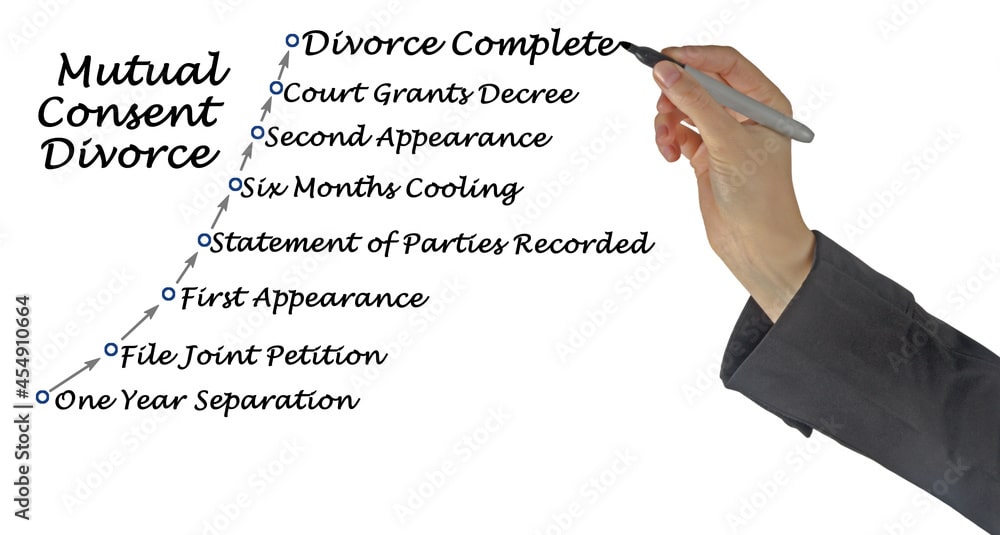
- Mutual consent Divorce (Article 55 of the Law on Marriage and Family 2014): When both spouses request a divorce, if they voluntarily agree and have reached an agreement on asset division and child custody that protects the legitimate rights and interests of the wife and children, the Court will recognize the agreement. If they cannot reach such an agreement, or if it fails to ensure those rights, the Court will resolve the matter.
- Unilateral Divorce (Article 56 of the Law on Marriage and Family 2014): If reconciliation at the Court fails, the Court shall settle a divorce if there is evidence of domestic violence or serious violations of spousal rights and obligations, rendering the marriage irretrievably broken. Additionally, if one spouse is declared missing by the Court, the other may request a divorce.

3. Is pre-filing mediation mandatory?
Currently, Vietnamese law does not require mandatory mediation before filing for divorce. However, the State encourages reconciliation in marital relationships.
Even without reconciliation, either spouse may file directly with the Court. Nonetheless, in some cases, the Court may still request the parties to attempt mediation before proceeding with the trial.
Thus, while mediation is encouraged, it is not a prerequisite for initiating divorce proceedings in Vietnam.
III. Questions on divorce cases in Vietnam
1. Can a foreigner married to a Vietnamese citizen abroad file for divorce in Vietnam?
Article 127 of the Law on Marriage and Family 2014 defines divorce involving foreign elements, including:
- Divorce between a Vietnamese citizen and a foreigner, or between two foreigners residing in Vietnam, shall be settled by a competent Vietnamese authority in accordance with Vietnamese law.
- If the Vietnamese spouse does not reside in Vietnam at the time of divorce, the case will be resolved under the law of the country where the couple has their common residence; if there is no common residence, Vietnamese law shall apply.
Thus, a foreigner married to a Vietnamese citizen abroad may file for divorce in Vietnam if they reside in Vietnam or if the couple has no common residence.
2. Can a foreigner file for divorce in Vietnam?
Under Article 127, a foreigner can divorce in Vietnam in the following cases:
- Divorce between a Vietnamese citizen and a foreigner residing in Vietnam.
- Divorce between two foreigners residing in Vietnam.
3. Can a spouse married in Vietnam but living abroad divorce in Vietnam?
Article 127 of the Law on Marriage and Family 2014, if the spouse has no common residence at the time of divorce, the case shall be resolved under Vietnamese law.

4. Cases where divorce is not permitted in Vietnam
Clause 3, Article 51 of the Law on Marriage and Family 2014 prohibits unilateral divorce in the following circumstances:
- The wife is pregnant.
- The wife has recently given birth.
- The wife is nursing a child under 12 months old.
In addition, for unilateral divorce to be issued, there must be evidence of domestic violence or serious violations of marital rights and obligations leading to irretrievable breakdown of the marriage.
5. When is divorce considered unlawful in Vietnam?
A divorce may be deemed unlawful if when the divorce does not comply with the provisions of the law, or when the parties violate the prescribed procedures and processes, as follows:
- Divorce is not allowed in cases where unilateral divorce is not possible.
- One party lacks legal capacity (e.g., due to mental illness and formally declared incapacitated state).
- The statutory grounds or procedural requirements for divorce are not met.
- In cases involving foreigners, jurisdictional requirements (such as residence or relevant connection to Vietnam) are not satisfied.
IV. NPLAW’s legal consulting services on divorce in Vietnam
The above provides comprehensive information from NPLAW to assist clients in understanding divorce laws in Vietnam. If you have further questions about the issues discussed, or other legal matters, please contact NPLAW for direct consultation and professional guidance.