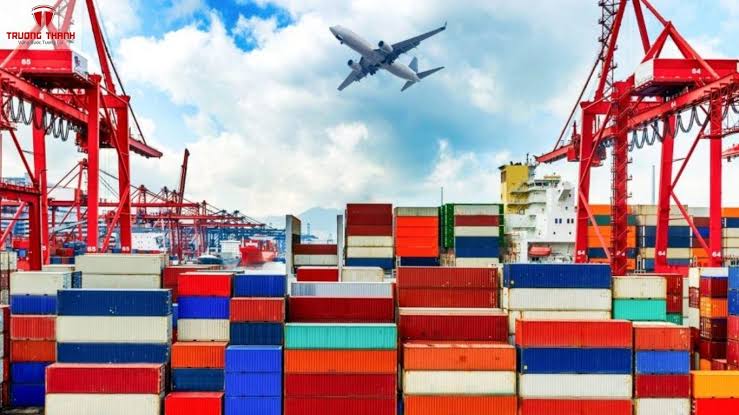
The VAT refund procedure for exported goods is a matter of significant concern for many enterprises engaged in import-export activities. In practice, however, numerous refund applications are delayed or rejected due to deficiencies in supporting documents, invoicing errors, or failure to satisfy all statutory requirements. A thorough understanding of the applicable procedures, eligibility criteria, and main considerations relating to VAT refunds for exported goods can help enterprises minimize legal risks, optimize cash flow, and safeguard their lawful rights and interests in commercial operations.
I. Current shortcomings in the legal framework governing VAT refunds
One of the major shortcomings in the current legal framework governing Value-Added Tax (“VAT”) refunds is the discrepancy between statutory requirements and the realities of business operations. Under the law, enterprises must possess valid VAT invoices, bank payment records, and documents evidencing actual transactions before their VAT refund claims may be considered. In practice, however, many exporters procure goods from household businesses, small-scale production facilities, or individual suppliers, making it difficult to satisfy all requirements relating to valid input invoices.

In addition, many international commercial transactions involve deferred payment arrangements, third-party payments, or debt offset mechanisms, which may easily be viewed as failing to satisfy the conditions for VAT refunds. Furthermore, even where actual commercial transactions have occurred, VAT refund processing may still be delayed if tax authorities identify potential risks within the supply chain or concerning invoices issued by upstream suppliers.
II. Overview of VAT refund procedures for exported goods
1. What is the VAT refund procedure for exported goods?
Pursuant to Clause 2, Article 29 of Decree No. 181/2025/ND-CP, if an enterprise has exported goods or services during a month or quarter and has uncredited input VAT of 300 million VND or more, it is entitled to claim a VAT refund on a monthly or quarterly basis. However, VAT refunds are not available for imported goods that are subsequently exported to another country.
For such a purpose, “imported goods subsequently exported to another country” refers to goods imported into Vietnam from abroad and then directly exported or exported under an export entrustment arrangement, excluding imported materials used for the manufacture or processing of export products.
The law also specifically identifies the entities entitled to VAT refunds in certain special circumstances, including:
- In export entrustment arrangements, the enterprise owning the goods entrusted for export is entitled to the VAT refund;
- In onward processing arrangements, the enterprise that enters into the export processing contract with the foreign party is entitled to the VAT refund;
- In respect of exported goods used for overseas construction projects, the enterprise exporting such goods for the project is entitled to the VAT refund.
The regulations governing VAT refunds and the determination of refundable VAT amounts in respect of exported goods and services are currently set out in Clause 2, Article 29 of Decree No. 181/2025/ND-CP and Article 7 of Circular No. 69/2025/TT-BTC.
2. The role of supporting documents in VAT refund procedures for exported goods
Pursuant to Article 16 of the Law on Value-Added Tax 2024 (“VAT Law 2024”), transactions involving the sale of goods and the provision of services must be supported by invoices and documents issued in accordance with legal requirements. Enterprises applying the tax credit method must use VAT invoices, whereas enterprises applying the direct calculation method must use sales invoices.
For export activities, documents such as input VAT invoices, export contracts, customs declarations, bank payment records, and commercial invoices serve as essential evidence demonstrating that actual transactions have occurred. If supporting documents are incomplete, inaccurate, or inconsistent, an enterprise may be denied VAT credits or VAT refunds even if the goods have in fact been exported.
Accordingly, proper management and retention of supporting documents play a particularly important role in the VAT refund process for exported goods.
3. Differences between VAT refunds and VAT deductions in export activities
In export activities, both VAT refunds and VAT deductions are mechanisms designed to address input VAT incurred by enterprises. However, the nature and conditions applicable to these two mechanisms differ significantly.
A VAT deduction allows an enterprise to offset legitimate input VAT against output VAT payable during a tax period in accordance with Article 14 of the VAT Law 2024. Where input VAT exceeds output VAT, the excess amount is carried forward to subsequent tax periods for continued offsetting.
In contrast, a VAT refund involves the State reimbursing an enterprise for input VAT that has not been fully deducted, provided all statutory conditions are satisfied.
For export activities, Clause 2, Article 29 of Decree No. 181/2025/ND-CP provides that enterprises exporting goods or services and having undeducted input VAT of at least 300 million VND may be considered for a monthly or quarterly VAT refund, except in cases specifically excluded from refund eligibility.
III. Legal regulations governing VAT refund procedures for exported goods
1. Conditions for obtaining a VAT refund on exported goods
Pursuant to Clause 1, Article 15 of the VAT Law 2024, if an enterprise exports goods or services during a month or quarter and has undeducted input VAT of 300 million VND or more, it is entitled to a VAT refund on a monthly or quarterly basis, except in cases involving imported goods subsequently exported to another country.
In case an enterprise engages in both export activities and domestic sales, it must separately account for the input VAT attributable to export activities. If separate accounting is not feasible, the input VAT attributable to exports shall be determined based on the ratio of export revenue to total taxable revenue during the refund period.
In addition, input VAT relating to exported goods and services is refundable only after being offset against VAT payable on domestic sales activities, with the remaining balance amounting to at least 300 million VND. Furthermore, the refundable VAT amount may not exceed 10% of export revenue generated during the refund period.
Any input VAT attributable to exported goods that exceeds the 10% cap and therefore cannot be refunded may be carried forward to subsequent tax periods for continued crediting and future refund determination in accordance with applicable regulations.
2. Which cases are ineligible for VAT refunds on exported goods?
Pursuant to Clause 1, Article 15 of the VAT Law 2024, enterprises are not eligible for VAT refunds where imported goods are subsequently exported to another country. It represents a significant change in current tax regulations aimed at preventing abuse of temporary import - re-export arrangements for VAT refund purposes.
In practice, enterprises may also be denied VAT refunds if they fail to satisfy documentary and payment requirements prescribed by law, including where:
- Valid VAT invoices are unavailable or contain incorrect information;
- Required non-cash payment evidence is absent for transactions subject to such requirements;
- The enterprise cannot demonstrate that the goods were actually exported;
- Input VAT attributable to export activities cannot be separately accounted for as required by law;
- Illegal invoices, fictitious invoices, or documents exhibiting tax-risk indicators are used.
3. Procedures for filing a VAT refund application for exported goods
Pursuant to Articles 28, 31, and 32 of Circular No. 80/2021/TT-BTC, enterprises seeking VAT refunds in respect of exported goods and services must prepare a complete application dossier and comply with the prescribed procedures.
- VAT refund application dossier
A VAT refund application for exported goods and services generally includes the following documents:
- An Application for Refund of State Budget Revenue using Form No. 01/HT attached to Appendix I of Circular No. 80/2021/TT-BTC (as amended and supplemented by Circular No. 40/2025/TT-BTC and Circular No. 94/2025/TT-BTC);
- A Schedule of Purchase Invoices and Supporting Documents using Form No. 01-1/HT, unless electronic invoices have already been transmitted to the tax authority;
- A List of Customs Declarations Cleared Through Customs using Form No. 01-2/HT for exported goods that have completed customs clearance procedures.
Depending on the specific circumstances, tax authorities may additionally require export contracts, bank payment records, commercial invoices, or other supporting documents evidencing actual export transactions.

- Procedures for filing a vat refund application
Enterprises may submit VAT refund applications electronically or in paper form in accordance with Clauses 1 and 2, Article 32 of Circular No. 80/2021/TT-BTC.
- Step 1: The enterprise reviews all supporting documents, invoices, customs declarations, and prepares the refund dossier in accordance with the prescribed forms and requirements.
- Step 2:The taxpayer may submit the application electronically via the Tax Authority’s Electronic Information Portal or file a paper application directly or by post.
- Step 3:Within three (03) working days from receipt of the application, the tax authority will notify the applicant of its acceptance of the dossier, request additional documents, or issue a notice that the application is ineligible for a VAT refund where statutory requirements have not been satisfied.
- Step 4:Upon completion of its review and confirmation that the enterprise satisfies all refund conditions, the tax authority shall issue a VAT refund decision in accordance with the prevailing tax administration procedures.
4. What should enterprises pay attention to regarding input VAT invoices when applying for a VAT refund?
When applying for a VAT refund in respect of exported goods, input VAT invoices constitute one of the most important grounds upon which tax authorities assess the legitimacy of the claimed refundable VAT amount. Enterprises should exercise particular care in the use and management of invoices in compliance with applicable laws.
Pursuant to Article 16 of the VAT Law 2024, enterprises applying the tax credit method must use VAT invoices for transactions involving the purchase and sale of goods and services. Furthermore, invoices must accurately reflect the actual transaction, including details of the buyer and seller, the value of goods or services supplied, and the applicable VAT rate.
In practice, many VAT refund applications are subject to requests for clarification or are rejected because input invoices contain deficiencies such as incorrect issuance dates, inaccurate tax identification numbers, inconsistencies with payment records, or issuance by suppliers identified as presenting tax compliance risks. Moreover, if enterprises purchase goods from household businesses or individuals unable to issue VAT invoices, difficulties often arise in substantiating eligibility for VAT credits and VAT refunds.
IV. Questions regarding VAT refund procedures for exported goods
1. Can exported goods qualify for a VAT refund if payment has not yet been received?
An enterprise may still be eligible for a VAT refund in respect of exported goods even if payment has not yet been received, provided that the payment due date stipulated in the export contract has not yet arrived and the enterprise satisfies all other statutory conditions for VAT refunds.
Pursuant to Article 29 of Decree No. 181/2025/ND-CP, enterprises engaged in the export of goods or services with undeducted input VAT of 300 million VND or more are entitled to claim a VAT refund. In addition, under Article 4 of Circular No. 69/2025/TT-BTC, exported goods are eligible for the 0% VAT rate only if non-cash payment documents are available in accordance with applicable regulations.
2. May an enterprise authorize a third party to conduct payment transactions in connection with a VAT refund claim for exported goods?
Pursuant to Clause 2, Article 26 of Decree No. 181/2025/ND-CP, effective from October 1st, 2025, purchases of goods and services paid through an authorized third party via non-cash payment methods may still qualify for VAT deduction and VAT refund treatment, provided all statutory requirements are satisfied.
Specifically, third-party payment arrangements include situations where the seller instructs the purchaser to make payment to a third party designated by the seller, provided that such arrangement is expressly stipulated in a written contract. Furthermore, the designated third party must be a legally operating organization or individual, and the enterprise must maintain adequate non-cash payment records evidencing the transaction.
3. What aspects will a tax review service provider examine in relation to VAT refunds?
When assisting enterprises with VAT refund applications for exported goods, tax review service providers generally conduct a comprehensive examination of the refund dossier, supporting documents, and refund conditions to assess compliance before submission to the tax authority. Typically, the review covers the following matters:
- Compliance with VAT refund conditions under Clause 1, Article 15 of the VAT Law 2024 and Article 29 of Decree No. 181/2025/ND-CP;
- The legality and validity of input VAT invoices, non-cash payment documents, and export customs declarations;
- The separate accounting of input VAT attributable to exported goods and services;
- Reconciliation of export revenue, export contracts, shipping documents, and payment records;
- Assessment of invoice-related risks, related-party transactions, and transactions displaying unusual characteristics;
- Determination of whether the application falls under the “refund first, audit later” or “audit first, refund later” category under Article 33 of Circular No. 80/2021/TT-BTC.
In addition, such reviews help minimize errors that could result in requests for clarification, supplementation of documents, or recovery of refunded tax amounts following tax inspections or audits under Article 39 of Circular No. 80/2021/TT-BTC.
4. What are the most common deficiencies found in VAT refund dossiers for exported goods?
In practice, many VAT refund applications for exported goods are subject to requests for clarification, supplementary submissions, or prolonged processing times due to deficiencies in invoices, supporting documents, or declared information.

Common issues include:
- Input VAT invoices containing incorrect enterprise information, tax identification numbers, or issuance dates;
- Incomplete non-cash payment documents or records inconsistent with contractual terms;
- Discrepancies among customs declarations, commercial invoices, and shipping documents regarding quantities or values of goods;
- Failure to separately account for input VAT attributable to export activities as required under Clause 2, Article 29 of Decree No. 181/2025/ND-CP;
- Failure to submit invoice schedules, purchase document schedules, or customs declaration lists as prescribed by Article 28 of Circular No. 80/2021/TT-BTC;
- Use of invoices issued by entities presenting tax compliance risks or use of unlawful invoices.
5. Should an enterprise conduct a tax review before submitting a VAT refund application?
Enterprises are strongly advised to conduct a tax review before filing a VAT refund application in order to verify the validity of invoices, payment records, customs declarations, and compliance with statutory VAT refund requirements. Such pre-submission reviews enable enterprises to identify and rectify deficiencies in tax declarations, accounting records, or supporting documents before the tax authority examines the application.
Furthermore, under Article 33 of Circular No. 80/2021/TT-BTC, a VAT refund application may be classified as a high-risk tax dossier and therefore be subject to the “audit first, refund later” procedure. Consequently, proactively reviewing the dossier prior to submission not only reduces the likelihood of requests for clarification and prolonged processing times but also minimizes the risk of tax reassessment, recovery of refunded amounts, or administrative sanctions following subsequent tax inspections and audits.
V. Why should you seek legal advice from NPLaw regarding vat refund procedures for exported goods?
VAT refund procedures for exported goods involve highly specialized legal and tax regulations, requiring strict compliance with documentary, invoicing, payment, and export-related requirements. Even a minor error during the declaration process or preparation of supporting documents may result in delays, rejection of refund claims, or future tax audit and reassessment risks.
With a team of experienced lawyers and tax professionals specializing in taxation and corporate advisory matters, NPLaw provides comprehensive support in reviewing VAT refund eligibility, verifying the legal validity of invoices and supporting documents, assessing potential risks within refund applications, and assisting enterprises throughout their dealings with tax authorities.
In addition, NPLaw assists enterprises in addressing issues relating to tax authority requests for clarification, tax-related complaints, and disputes arising during the VAT refund process for exported goods.
The above information is provided for reference purposes only. Should you require detailed advice regarding your specific circumstances, please contact NPLaw for prompt legal assistance.