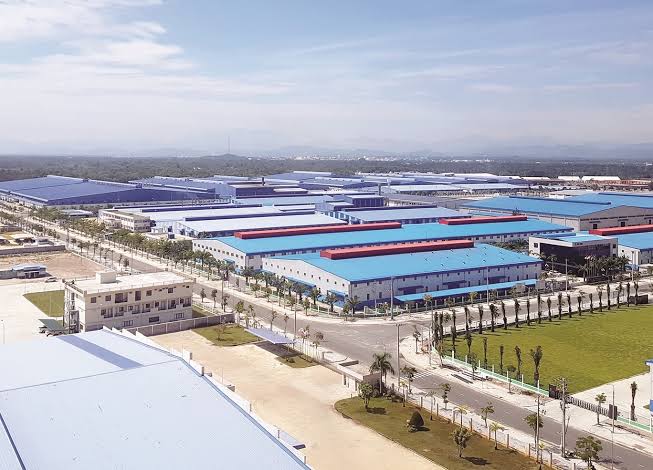
I. Current landscape of foreign companies participating in international cooperation projects
At present, foreign companies participating in international cooperation projects in Vietnam is developing vigorously, driven by the following factors:
- Government’s open-door policies: Vietnam has actively entered into and implemented next-generation Free Trade Agreements (FTAs) such as the CPTPP and EVFTA, thereby establishing a transparent and preferential legal framework for foreign investors.
- Market potential: With a large population, stable economic growth, and increasing demand for infrastructure development, energy, high technology, and related sectors, Vietnam remains an attractive investment market.
- Diversity of cooperation sectors: International cooperation projects are no longer confined to manufacturing and processing activities but have expanded into sectors requiring advanced technology and substantial capital, including renewable energy, transportation infrastructure under Public-Private Partnership (PPP) models, information technology, and finance.
Nevertheless, these opportunities are accompanied by substantial challenges. Foreign companies frequently encounter obstacles arising from complicated administrative procedures, differences in business culture, and overlapping legal regulations. Misinterpretation of or non-compliance with applicable laws may result in legal risks, project delays, and financial losses.
II. What is meant by foreign companies participating in international cooperation projects?
1. What is a foreign company participating in an international cooperation project?
The participation of a foreign company in an international cooperation project refers to the circumstance in which one or more enterprises established and operating under foreign laws conduct investment, business, or development cooperation activities in another country through forms such as establishing a new legal entity (joint venture companies or wholly foreign-owned enterprises), capital contribution, share acquisition, or entering into Business Cooperation Contracts (BCCs) with domestic or international partners. Such projects are typically large-scale, involve multiple stakeholders, and are governed by both the host country’s laws and relevant international treaties.

In essence, the participation of foreign companies in international cooperation projects represents the cross-border integration of resources to achieve common objectives, while simultaneously requiring strict compliance with diverse legal regulations.
2. Importance of foreign companies participating in international cooperation projects
For the host country (Vietnam):
- Attracting investment capital: Bringing substantial financial resources to supplement the State budget and support development objectives.
- Technology transfer and management expertise: Enhancing production capacity, management capability, and the quality of human resources.
- Job creation and income generation: Contributing to employment opportunities and improving income levels for local residents.
- Promoting international economic integration: Strengthening the country’s position in the international arena.
For foreign companies themselves:
- Market expansion: Accessing new markets and exploiting growth potential.
- Optimization of resources: Taking advantage of competitive production costs, raw materials, and labor resources.
- Investment diversification: Distributing risks and enhancing global competitiveness.
- Enhancing brand value and reputation: Reinforcing market position on an international scale.
3. Important considerations for foreign companies participating in international cooperation projects
When participating in international cooperation projects, foreign companies should pay particular attention to the following matters to ensure project success and minimize legal risks:
- Careful understanding of the host country’s legal system: Vietnamese laws governing investment, enterprises, taxation, labor, land, and environmental matters contain many distinctions and are subject to frequent amendments.
- Selection of an appropriate investment structure: The decision to establish a wholly foreign-owned enterprise, a joint venture company, or to enter into a Business Cooperation Contract (BCC) directly affects investors’ rights, obligations, and level of control.
- Investment and business licensing procedures: These procedures are highly complex and require comprehensive document preparation and strict adherence to statutory timelines.
- Cooperation agreements: Provisions in cooperation agreements (joint venture agreements, BCCs, sale and purchase agreements) must be carefully drafted, precise, and capable of addressing potential dispute scenarios.
- Taxation and financial issues: Regulations concerning corporate income tax, value-added tax, foreign contractor tax, transfer pricing, and related obligations should be thoroughly reviewed to optimize profitability and avoid violations.
- Labor management and insurance compliance: Compliance with Vietnamese labor laws, including regulations on labor contracts, salaries, social insurance, and labor dispute resolution, is mandatory.
- Protection of Intellectual Property rights and trade secrets: Appropriate legal and technical measures must be implemented to safeguard intellectual property assets and sensitive business information.
- Dispute resolution mechanisms: The method of dispute resolution (Vietnamese courts or international arbitration) should be clearly determined in contractual documents from the outset.
III. Legal regulations governing foreign companies participating in international cooperation projects
1. Main legal regulations applicable to foreign companies participating in international cooperation projects
When participating in international cooperation projects in Vietnam, foreign companies must pay particular attention to the multi-sector legal framework to ensure regulatory compliance and protect their investment interests.
- First, regarding investment conditions and investment forms. Pursuant to Article 9 of the Law on Investment 2020, as amended and supplemented in 2025, investors must review the list of sectors and trades subject to market access restrictions applicable to foreign investors under Section B of Appendix I attached to Decree No. 31/2021/ND-CP.
- Second, regarding corporate governance structures. To ensure lawful control over entities established in Vietnam, investors must strictly comply with the Law on Enterprise 2020, as amended and supplemented in 2025. Specifically, enterprises must satisfy the requirements regarding the number and qualifications of legal representatives under Article 12 of the Law.
- Third, regarding land use rights. Pursuant to Article 28 of the Land Law 2024, foreign-invested economic organizations may access land through land lease, land allocation, or capital contribution using land use rights. Investors should pay particular attention to the conditions governing the exercise of rights relating to conversion, transfer, lease, sublease, inheritance, donation of land use rights, mortgage, capital contribution using land use rights, and receipt of transferred or donated land use rights as stipulated under Article 45 of the Law.
- Fourth, regarding construction activities. Where projects include construction components, enterprises must comply with regulations on construction permits under Article 89 of the Construction Law 2014, as supplemented by Point b Clause 1 Article 79 of the Electricity Law 2024 and amended by Point b Clause 1 Article 57 of the Urban and Rural Planning Law 2024 and Point c Clause 1 Article 56 of the Railway Law 2025.
- Fifth, regarding labor management. Pursuant to Article 151 of the Labor Code 2019, foreign employees working in Vietnam must satisfy conditions relating to age, work permits, health status, and professional qualifications. All labor relationships must be established through written labor contracts in accordance with Article 13 of the Labor Code 2019, ensuring compliance with standards relating to salaries, working hours, and insurance obligations under Vietnamese law.
- Finally, an essential factor involves international treaties to which Vietnam is a member, including the EVFTA, CPTPP, and Investment Protection Agreements (IPAs). Under Clause 1 Article 6 of the Law on International Treaties 2016, where domestic legal normative documents and international treaties to which the Socialist Republic of Vietnam is a member contain differing provisions on the same matter, the provisions of the applicable international treaty shall prevail, except for the Constitution.
2. Violations related to foreign companies participating in international cooperation projects
When participating in international cooperation projects, foreign companies may face significant legal risks and severe sanctions if they commit the following violations:
- First, violations concerning market access conditions and investment licensing requirements. It constitutes the primary and most critical legal barrier. Pursuant to Clause 3 Article 9 of the Law on Investment 2020, as amended and supplemented in 2025, foreign investors are required to satisfy conditions relating to capital ownership ratios, operational scope, investment capability, and related matters in sectors subject to restrictions.
- Second, violations relating to financial obligations and capital contribution schedules. Under Article 113 of the Law on Enterprise 2020, as amended and supplemented in 2025, shareholders must fully contribute capital within 90 days. Additionally, tax violations under the Law on Tax Administration 2019, as amended and supplemented in 2024, are subject to strict scrutiny.
- Third, violations concerning foreign labor management and contractual performance. In international projects, employing foreign experts without valid work permits remains a common violation, directly contravening Point d Clause 1 Article 151 of the Labor Code 2019. Furthermore, under structures such as Business Cooperation Contracts (BCCs), failure to fulfill commitments relating to project progress and technical standards may trigger liabilities for damages and contractual penalties under Articles 418 and 419 of the Civil Code 2015..
IV. Questions regarding foreign companies participating in international cooperation projects
1. Are there any licensing requirements for foreign companies participating in international cooperation projects?
- First, for projects involving direct foreign investment, the Investment Registration Certificate (IRC) is the primary legal document. Pursuant to Article 37 of the Law on Investment 2020, as amended and supplemented in 2025, foreign investors are required to implement procedures for the issuance of an IRC to establish investor status, project objectives, scale, and operational duration in accordance with the procedures prescribed under Article 38 of the same Law. After obtaining the IRC, in order to officially operate as a legal entity in Vietnam, the enterprise must proceed with obtaining an Enterprise Registration Certificate (ERC) pursuant to Article 27 of the Law on Enterprise 2020, as amended and supplemented in 2025.
- Second, enterprises should pay attention to specialized business licenses. Pursuant to Article 7 of the Law on Investment 2020, as amended and supplemented in 2025, where a project falls within the list of conditional business investment sectors specified in Appendix IV of the Law.
- Third, depending on the nature of the project, enterprises are required to complete procedures relating to environmental protection and infrastructure. Specifically, entities subject to environmental licensing are prescribed under Clause 1 Article 39 of the Law on Environmental Protection 2020, as amended by Point a Clause 9 Article 1 of the Law amending 15 Laws in the sectors of Agriculture and Environment 2025. Furthermore, where the project involves new construction items, obtaining a Construction Permit from the competent authority under Article 89 of the Construction Law 2014, supplemented by Point b Clause 1 Article 79 of the Electricity Law 2024 and amended by Point b Clause 1 Article 57 of the Urban and Rural Planning Law 2024 and Point c Clause 1 Article 56 of the Railway Law 2025, is mandatory prior to commencement of construction works.
- Finally, in terms of personnel management, companies must comply with regulations governing foreign employees. Pursuant to Articles 151 and 152 of the Labor Code 2019, foreign experts and technical workers engaged in project activities in Vietnam must obtain Work Permits or confirmations of exemption from work permit requirements (except in specific exempted cases) to ensure lawful residence and employment.
2. What procedures must be carried out for foreign companies to participate in international cooperation projects?
- Step 1: Approval of investment policy (if applicable). For large-scale projects or projects in specialized sectors, investors must submit applications for approval of investment policy by competent state authorities (the National Assembly, the Prime Minister, or the Provincial People’s Committee).
- Step 2: Issuance of the Investment Registration Certificate (IRC). Such a step establishes the investor’s official investment rights.
- Step 3: Establishment of a legal entity. After obtaining the IRC, the investor proceeds with the issuance of the Enterprise Registration Certificate (ERC) in accordance with the procedures prescribed under Clause 2 Article 26 of the Law on Enterprise 2020, guided by Chapter IV of Decree No. 168/2025/ND-CP.
3. What should foreign companies do if disputes arise in international cooperation projects?
Pursuant to Clause 3 Article 14 of the Law on Investment 2020, as amended and supplemented in 2025, disputes between foreign investors and relevant parties or foreign-invested economic organizations may be resolved through one of the following methods:
- Vietnamese Courts: Resolution in accordance with civil procedural laws and procedures.
- Vietnamese Arbitration: Resolution through commercial arbitration institutions established in Vietnam.
- Foreign Arbitration: Resolution before arbitration institutions located in foreign jurisdictions.
- International Arbitration: Commonly through internationally reputable arbitration institutions (such as SIAC, ICC, etc.).
- Arbitration Established by Agreement of the Parties: A form of arbitration established by mutual agreement of the disputing parties for the purpose of resolving a specific dispute without involving a permanent arbitration institution.

It should be noted that the selected dispute resolution method must be agreed upon in writing within the contract or in a separate agreement. For foreign companies, arbitration (particularly international or foreign arbitration) is often the preferred option due to its high level of confidentiality, the expertise of arbitrators, and the enforceability of arbitral awards in 172 countries under the New York Convention 1958.
4. How are the rights and obligations of foreign companies in international cooperation projects regulated?
With respect to rights and benefits, foreign investors are entitled to significant guarantees and incentives under the Law on Investment 2020, as amended and supplemented in 2025.
- First, the State guarantees protection of property ownership rights, prohibits nationalization, and safeguards intellectual property rights under Article 10 of the Law.
- In particular, under Article 12 of the same Law, investors are entitled to remit lawful profits and assets abroad after fulfilling all financial obligations.
- In addition, enterprises may enjoy investment incentives under Clause 1 Article 15 of the Law in order to optimize project efficiency.

Regarding obligations, foreign companies are responsible for contributing capital in full and within the committed timeframe.
- Investors must complete capital contributions within 90 days from the date of issuance of the Enterprise Registration Certificate, unless the company charter or share subscription agreement prescribes a shorter period, pursuant to Article 113 of the Law on Investment 2020, as amended and supplemented in 2025.
- Furthermore, enterprises are obligated to comply with periodic reporting requirements concerning project implementation status and financial statements under Article 72 of the Law on Investment 2020, as amended and supplemented in 2025.
- Project implementation must remain consistent with the contents specified in the Investment Registration Certificate. Any amendments relating to project objectives, scale, or implementation schedule must be promptly registered in accordance with Article 41 of the Law on Investment 2020, as amended and supplemented in 2025.
5. What types of international cooperation projects can foreign companies participate in?
- Foreign Direct Investment (FDI) Projects:
- Establishment of wholly foreign-owned enterprises: Foreign investors independently establish enterprises in Vietnam.
- Establishment of joint venture companies: Cooperation with one or more Vietnamese partners to establish a new enterprise.
- Business Cooperation Contracts (BCCs): Cooperation for profit and product sharing without establishing a new legal entity.
- Build – Operate – Transfer (BOT), Build – Transfer – Operate (BTO), and Build – Transfer (BT) contracts: Commonly applied in infrastructure projects.
- Investment through capital contribution, share acquisition, or purchase of contributed capital portions: Acquisition of part or all of the equity interests in Vietnamese enterprises.
- Official Development Assistance (ODA) and Foreign Non-Governmental Aid Projects: Projects financed by foreign governments or international non-governmental organizations for development purposes.
- Scientific and Technological Cooperation Projects: Cooperation in research, technology transfer, and new product development between Vietnamese and foreign scientific institutions and enterprises.
- Cultural, Educational, and Healthcare Cooperation Projects: Student and lecturer exchange programs, educational cooperation, establishment of healthcare facilities, and organization of cultural events.
V. Are you looking for a legal expert to assist with foreign companies participating in international cooperation projects?
Strict compliance with investment regulations not only helps enterprises avoid unnecessary legal and financial risks but also establishes a foundation for sustainable development within the Vietnamese market. However, due to the complexity and frequent amendments of the legal system, independently researching and implementing the required procedures may be both difficult and time-consuming.
If you are experiencing difficulties in selecting an appropriate investment structure, preparing application dossiers, carrying out legal procedures, or resolving disputes, contact NPLaw today for professional assistance.
The above information is provided for reference purposes only. Should clients require detailed advice for specific cases, please contact NPLaw Firm for immediate consultation.