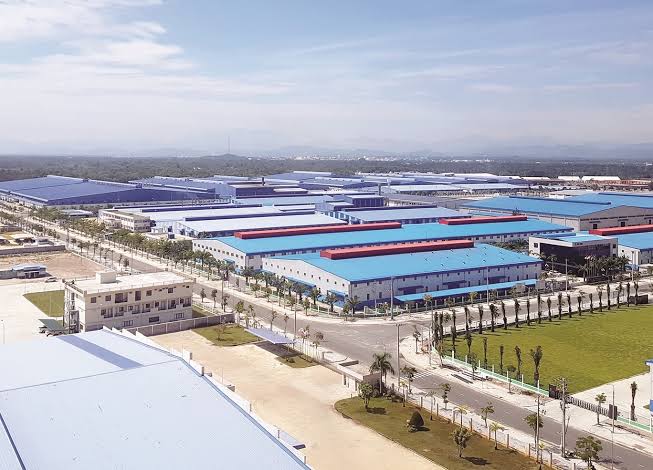
A change of construction location is a common occurrence in construction practice; however, not every case may be implemented at the discretion of the parties involved. The following article analyzes the concept, applicable legal regulations, required procedures, and potential legal risks associated with changing a construction location, enabling project owners and contractors to proactively manage compliance and risk control.
I. Current issues relating to changes of construction location
In practice, changes of construction location frequently occur during the implementation of construction projects, particularly in large-scale projects, projects with long implementation periods, or projects affected by various objective factors. In many cases, the originally designated construction site is no longer suitable due to planning adjustments, land clearance difficulties, changes in investment demands, or additional requirements imposed by competent State authorities.

However, many project owners and contractors still underestimate the legal implications of changing a construction location, resulting in unauthorized adjustments without obtaining the necessary approvals or updating relevant legal documentation. Such actions may expose the parties to significant risks, including administrative sanctions, suspension of construction activities, compulsory restoration of the original conditions, or contractual disputes among the parties involved.
II. Concept of a change of construction location
1. What is a change of construction location?
A change of construction location refers to the adjustment by the project owner or relevant parties of the location where construction activities are conducted compared to the location specified in the project's legal documents, construction permit, investment policy approval decision, or executed construction contract. Such a change may involve relocating the entire project to a different location or adjusting only part of the construction area.
2. What factors should be considered when changing a construction location to ensure reasonableness and efficiency?
When changing a construction location, the project owner should comprehensively evaluate the following factors to ensure legality, feasibility, and effectiveness:
- Legal status of the new location: Compliance with planning requirements, lawful land use rights, eligibility for the issuance or amendment of construction permits, and satisfaction of environmental requirements.
- Necessity of amending legal documents: Including construction permits, investment policy approval decisions, design dossiers, environmental impact assessment reports, and other relevant approvals.
- Technical and construction conditions: Geological conditions, technical infrastructure, transportation accessibility, and compatibility with the proposed design and construction technologies.
- Impact on project schedule and costs: Potential delays, increased investment costs, compensation expenses, and contract amendment costs.
- Impact on construction contracts: Rights and obligations of the parties, variation clauses, compensation obligations, and allocation of risks.
- Risks of disputes and legal liabilities: Potential sanctions, suspension of construction activities, or disputes arising from non-compliant implementation of the change.
III. Legal regulations relating to changes of construction location
1. Which projects are required to obtain approval when changing a construction location?
Pursuant to Point b, Clause 3, Article 41 of the Law on Investment 2020, an investor whose project has obtained investment policy approval must implement procedures for obtaining approval of amendments to the investment policy if there is a change in the project location or if the land area used is increased or decreased by more than 10% or exceeds 30 hectares.
Accordingly, any change of construction location in respect of a project that has obtained investment policy approval must undergo amendment procedures to ensure legal compliance and mitigate potential risks.
2. How does the law regulate the responsibilities of project owners when changing a construction location?
When changing a construction location, project owners must not only consider technical and scheduling matters but must also fully comply with legal obligations prescribed under the Law on Investment and the Law on Environmental Protection.
Specifically:
- Pursuant to Clause 3, Article 41 of the Law on Investment 2020, if a project that has obtained investment policy approval undergoes a change of location, the project owner must complete procedures for obtaining approval of amendments to the investment policy before implementation.
- If the project is subject to environmental impact assessment requirements under Article 30 of the Law on Environmental Protection 2020, the project owner must conduct an environmental impact assessment for the new location.
- In cases where the project is located within a centralized manufacturing, business, service zone, or industrial cluster, and the new location remains consistent with the approved functional zoning plan, an environmental impact assessment may not be required under Point d, Clause 2, Article 27 of Decree No. 08/2022/ND-CP.
3. How may violations relating to unlawful changes of construction location be handled?
If a project owner changes a construction location without properly fulfilling reporting or notification obligations to the competent construction authority, such conduct constitutes a violation of regulations governing commencement of construction works under Point c, Clause 1, Article 15 of Decree No. 16/2022/ND-CP. Specifically, violations include failure to submit, or submission of incomplete reports containing mandatory information such as the project owner's name and address, project name, new construction location, construction scale, expected construction schedule, or commencement notices not made in the prescribed form.
- Administrative sanction: A fine ranging from 5,000,000 VND to 10,000,000 VND.
- Remedial measures: The project owner must supplement and complete all required reports and commencement notices in accordance with regulations, ensuring that competent authorities are accurately informed of the new construction location and implementation schedule.
In addition to administrative sanctions, if an unlawful change of construction location causes damage to other organizations or individuals, the project owner may also be liable for compensation under Article 584 of the Civil Code 2015, provided that actual damage exists and a causal relationship can be established between the violation and the resulting damage.
4. What are the legal procedures for changing a construction location?
- The change of a construction location in an investment project must comply with the procedures prescribed under Article 47 of Decree No. 31/2021/ND-CP and Article 38 of the Law on Investment 2020, which generally include the following steps:

Step 1: Preparation of application dossier. The dossier for changing a construction location includes:
- Written request for amendment of the investment project.
- Report on project implementation progress up to the time of amendment.
- Investor’s decision approving the project amendment (for organizational investors).
- Documents evidencing the investor’s legal status.
- Documents proving financial capacity (financial statements for the two most recent years, financial commitments from a parent company, financial institution, or guarantee provider).
- Investment project proposal including information on the investor, objectives, scale, capital, financing plan, location, implementation schedule, current land use status, labor demand, investment incentives, socio-economic impacts, and preliminary environmental impact assessment (if applicable).
- Pre-feasibility study report in lieu of an investment project proposal where required by construction laws.
- Documents evidencing land use rights (if the investor is not requesting land allocation or land lease from the State).
- Explanatory documents regarding the technology used (if the project is subject to technology appraisal requirements).
- Other documents as required by law.
Step 2: Submission of application dossier. The investor shall submit one set of application documents to the competent investment registration authority.
Step 3: Processing of application dossier. Within ten (10) working days from receipt of a valid dossier, the investment registration authority shall amend the Investment Registration Certificate for the investor.
Compliance with these procedures ensures that changes of construction location are carried out lawfully, thereby minimizing legal risks and potential disputes with competent state authorities.
IV. Questions relating to changes of construction location
1. How should a construction contract regulate changes of construction location in order to protect the parties’ interests?
In a construction contract, provisions regarding changes of construction location should be clearly and specifically stipulated from the outset to minimize disputes and protect the legitimate interests of all parties. The contract should clearly define the circumstances under which a change of construction location is permitted, the conditions triggering such a change, the authority responsible for making the decision, and the procedures for notification and written approval.
In addition, the contract should clearly allocate responsibilities concerning costs, adjustments to the project schedule, modifications to the scope of work, and any legal obligations arising from the change of construction location. Such provisions help ensure transparency, fairness, and practicality throughout the contract implementation process.
2. Is it necessary to obtain a revised construction permit when changing a construction location?
If a change of construction location results in a change to the construction location specified in the construction permit, the project owner is required to implement procedures for amending the construction permit before continuing construction activities.
Pursuant to Point b, Clause 1, Article 98 of the Law on Construction 2014 (as amended in 2020), as further guided by Clauses 1, 2, 4, and 5 of Article 62 of Decree No. 175/2024/ND-CP, during the construction process, if design modifications result in changes to the construction location or affect factors relating to the project's scale, floor area, or primary load-bearing structures, the project owner must apply for an amendment to the construction permit.
3. Is it necessary to conduct a new Environmental Impact Assessment when changing a construction location?
Pursuant to Article 30 of the Law on Environmental Protection 2020 and Point d, Clause 2, Article 27 of Decree No. 08/2022/ND-CP, a project owner must conduct an environmental impact assessment before changing the project location in the following circumstances:
- The investment project falls within the category of projects required to undergo an environmental impact assessment under the Law on Environmental Protection; and
- The project location is changed, except where the project is located within a centralized manufacturing, business, or service zone, or an industrial cluster, and the new location remains consistent with the approved functional zoning plan approved by the competent authority.
Accordingly, the obligation to conduct a new assessment only arises if the change of construction location affects environmental conditions in a manner contemplated by law. Project owners should carefully review the nature of the project and the characteristics of the new location to accurately determine their environmental compliance obligations and avoid procedural deficiencies.
4. How can disputes be resolved if the parties disagree on changing a construction location?
Pursuant to Clause 8, Article 146 of the Law on Construction 2014 (as amended and supplemented in 2020), which governs the principles and procedures for resolving disputes arising from construction contracts, disputes relating to changes of construction location shall be resolved in the following order:
First, the parties must respect the terms of the construction contract and any agreements reached during contract performance, while adhering to the principles of equality, cooperation, and good faith as prescribed in Point a, Clause 8, Article 146. On that basis, the parties are responsible for negotiating in good faith to reach agreement on matters relating to the change of construction location, including rights, obligations, and any additional costs incurred.

If the parties are unable to resolve the matter through negotiation, the dispute may be settled through other legally recognized mechanisms, namely mediation, commercial arbitration, or litigation before a competent court, depending on the contractual dispute resolution clause or applicable legal provisions, as stipulated in Point b, Clause 8, Article 146.
5. Who is responsible if a change of construction location causes project delays?
If the change of construction location is requested by the project owner, does not arise from a force majeure, and adversely affects the agreed project schedule, the project owner shall take the corresponding responsibility. Such responsibility may include extending the contract performance period, reimbursing reasonable additional costs incurred, and refraining from imposing delay sanctions on the contractor.
Conversely, if the change of construction location results from the contractor’s fault, the contractor shall be responsible for any resulting delays, including obligations to compensate for damages and pay contractual penalties (where agreed by the parties).
Where the change of construction location is caused by objective circumstances or force majeure as defined by law and the contract, such as natural disasters, planning adjustments, or decisions issued by competent state authorities, neither party shall be deemed at fault. However, both parties remain obligated to promptly notify one another, cooperate in adjusting the project schedule, and execute a contract amendment or addendum to serve as the legal basis for continued implementation.
V. Why should you seek legal advice from NPLaw regarding changes of construction location?
A change of construction location is not merely a technical issue; it may also give rise to numerous legal implications relating to investment, construction, environmental compliance, and contractual obligations. With a team of lawyers possessing in-depth expertise in construction and investment law, NPLaw assists clients in accurately assessing legal risks, determining licensing requirements, amending construction permits and investment dossiers, and conducting environmental impact assessments where necessary.
The above information is provided for reference purposes only. Should you require detailed advice regarding your specific circumstances, please contact NPLaw for prompt legal consultation.